Event Tracking Plan: The Boring Doc That Decides If Your AI Analytics Works
AI analytics ai powered analytics data platforms SaaS analytics
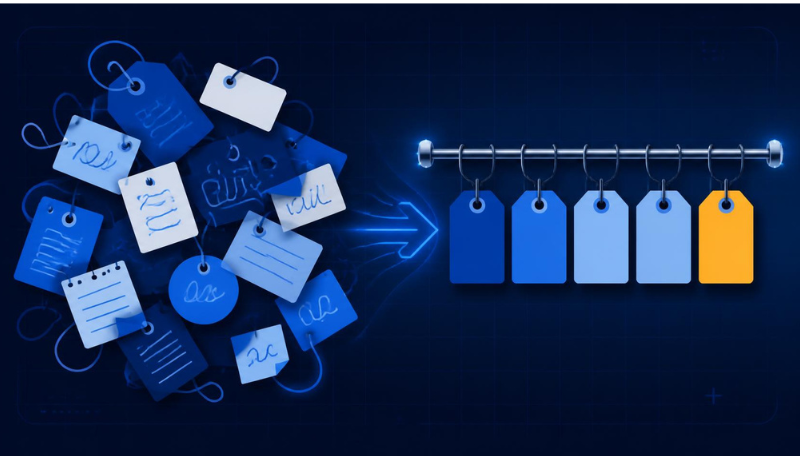
Everyone wants the AI analytics now... Ask a question in plain English, get an answer back, skip the dashboard entirely - and it sounds great.
Then you ask it something real. "How many trial users hit the aha moment last month?" It answers with total confidence, and the number is wrong, because your product fires four different events that all sort of mean "aha" and the AI picked one. You didn't know that. Now you're making a call on a number nobody checked.
That's not an AI problem. It's a naming problem, and almost nobody wants to fix it.
The mess underneath every analytics tool
Here's what actually lives inside most SaaS products. One developer named the signup event user_signed_up. Another shipped SignUp. A third called it registration_complete because that's what the ticket said. Same action, three names. Your analytics counts them as three separate things, or misses two of them entirely.
Now multiply that across every button, form and feature you've ever shipped. You've got a few hundred events, half of them duplicates, a quarter named by someone who left last year. Nobody remembers what event_17 tracks. The data is all there. It just doesn't mean anything.
This is the part the tool vendors skip. You can buy the slickest platform on earth. If the events going in are a mess, the insights coming out are a mess too. Fancier wrapping, same junk.
Why AI made this urgent
For years you could paper over this. A patient analyst knew that SignUp and user_signed_up were the same thing, so they quietly merged them in a spreadsheet before the board meeting. Slow and annoying, but it worked.
AI analytics kills that workaround. The whole promise is that anyone can ask a question and trust the answer without an analyst in the loop. No human to catch the duplicate event. No one to whisper "that number's actually double-counted." The AI just answers, fast and sure, and sure is the dangerous part.
Garbage in, confident garbage out. That's the new failure mode.
The cost of this isn't hypothetical. Gartner puts the price of poor data quality at at least $12.9 million a year for the average organisation. A lot of that is decisions made on numbers that were quietly wrong the whole time.
People think they have a tool problem, so they go shopping for a new platform. But they don't have a tool problem. They have a naming problem, and no tool fixes that for you. I've watched teams switch analytics vendors three times chasing better insights, and they drag the same messy events along every time. The platform changes. The confusion doesn't. You have to sit down and decide what you track and what you call it, once, before any of the clever stuff works. It's the least exciting afternoon you'll spend all quarter and the one that pays off the most. Ian Naylor, Founder SaaSToolkit.ai
The least exciting afternoon!
What an event tracking plan actually is
Strip the jargon off and it's a list. A shared document that says, for every meaningful thing a user can do in your product, here is the one event we fire, here is exactly what we call it, and here is what counts as that action.
That's it. No magic. A spreadsheet would do!
The point isn't the format. It's the agreement. Before the plan, every developer invents a name in the moment and hopes for the best. After it, there's one answer, written down, that everyone checks against. New feature ships, you open the plan, pick the naming pattern, add the row. The mess never starts.
A decent plan pins down a few things. The event name, in one consistent style, so signup is always signup and never Sign Up. The properties you attach, like plan tier or source, so you can slice the data later. A plain-English note on when the event fires, so "activated" means the same thing to sales as it does to engineering. And an owner, so there's a person to ask.
The naming style matters more than people expect. Pick lowercase with underscores, or camelCase, whatever you like. Pick one. Then never break it. Consistency beats cleverness here every single time.
It's a people problem wearing a data costume
Here's the bit that surprises founders. The hard part of an event tracking plan isn't technical. It's getting three teams to agree on what a word means.
Product thinks "active user" means logged in this week. Sales thinks it means used the core feature. Finance thinks it means paying. All reasonable. All different. And until someone forces that conversation and writes the answer down, your analytics is three arguments in a trenchcoat pretending to be one dashboard.
The tracking plan is where the real fights happen, and that's a good thing. The first time I run this with a team, the definitions never match. Product and sales will argue for twenty minutes about what 'activated' even means. People find that frustrating. I love it, because that argument was always there, hidden, quietly poisoning every report. The plan just drags it into the open so you can settle it once. After that, the data finally means one thing instead of five. Becky Halls, Strategist, SaaSToolkit.ai
Three arguments in a trenchcoat - That's most analytics setups.
Analysts have felt this cost for years, long before AI showed up. One widely cited survey found data scientists spend around 60% of their time just cleaning and organising data before they can start the actual analysis. That isn't analysis. It's janitorial work, caused almost entirely by data that was never named consistently at the source.
The payoff, and where to start
Do this and a few things get easier at once. Your behavioural segments stop leaking, because the events that define them actually mean what you think. New hires read the plan instead of pestering the one person who understands the data. And when you finally point an AI tool at it, you get a straight answer to a plain question instead of a confident guess.
Where to start is smaller than you fear. Don't try to document everything. List the ten actions that actually matter for the business. Signup, activation, the core feature, upgrade, cancel, the usual suspects. Name those properly first. Expand later.
Start with the handful of events tied to money and retention, ignore the rest for now. I watch companies try to boil the ocean and document three hundred events on day one. They burn out by event forty and abandon the whole thing. Ten events named right beats three hundred named badly. You can always add more once the habit sticks. The goal isn't a perfect map of everything. It's a trustworthy map of the things you'll actually make decisions on. Dev Patel, Analytics Engineer in SaaS
Ten events named right - Begin there.
None of this is glamorous. There's no demo you can show investors, no feature announcement, no screenshot that gets likes. It's a spreadsheet and an argument and an afternoon. But it's the thing standing between you and every clever analytics feature you actually want to use. The AI, the plain-English questions, the automated alerts, all of it runs on the events underneath. Name them well and the smart stuff works. Skip it and you're buying sports cars with no road to drive them on.
Build the plan. Then go get the fancy tools. (That order matters.)
FAQ
What is an event tracking plan?
It's a shared document that defines every user action your product tracks, the exact name for each event, the properties attached to it, and when it fires. Think of it as the single source of truth for your analytics, so everyone names and counts things the same way instead of inventing their own version.
Why does my analytics data feel untrustworthy?
Usually because the same action gets tracked under several different names, or events were bolted on over time with no shared rules. The data exists, but it's duplicated and inconsistent, so any report built on it is slightly wrong. A tracking plan fixes the cause rather than patching the symptom in spreadsheets.
Do I really need an event tracking plan for AI analytics?
More than ever. AI and natural-language analytics remove the human analyst who used to quietly clean and reconcile messy events before anyone saw a number. Without that safety net, the AI answers confidently from bad data. Clean, consistently named events are what make AI analytics trustworthy.
How do I create an event tracking plan?
Start with the ten or so actions tied to revenue and retention, like signup, activation, upgrade and cancel. For each one, agree a single name, a consistent naming style, the properties you want, and a plain-English definition of when it fires. Write it somewhere everyone can see, and add to it as you ship new features.
Who should own the event tracking plan?
Someone who sits between product and engineering, often a PM or an analytics engineer. The key is that one person is accountable for keeping it current, and that product, engineering and go-to-market teams all agree on the definitions in it. Shared ownership with no owner is how plans rot.
How does SaaSToolkit help?
SaaSToolkit captures behaviour, referral and revenue data from a single JavaScript snippet, so your events live in one place instead of scattered across tools with conflicting names. That makes a clean tracking plan far easier to keep, and it means the behavioural, acquisition and revenue data all speak the same language when you go looking for answers.