Behavioral Segmentation: Stop Treating Your Whole User Base Like One Person
funnel analytics funnel analytics for SaaS SaaS attribution SaaS analytics user journey analytics user behavior analytics behaviour analytics
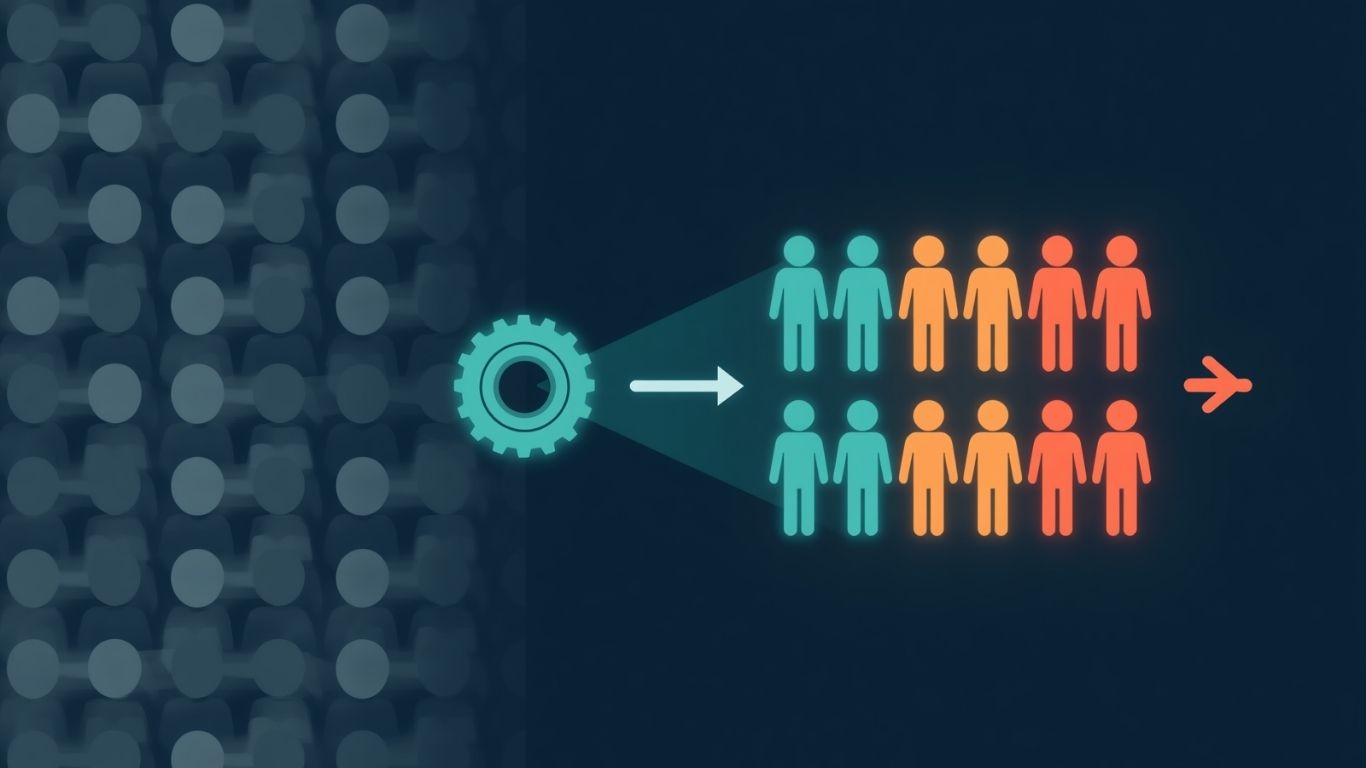
Picture your "average user" for a second. Middle of the funnel, middling engagement, middling value. Now go look at your actual data. That person doesn't exist. What you've really got is a power user who runs their whole week through your product sitting in the same bucket as someone who signed up, clicked twice, and never came back.
You've been talking to both of them like they're the same. That's the whole problem.
Behavioral segmentation fixes it. Instead of sorting people by what they are, you sort them by what they do. And what people do inside your product tells you far more than any job title ever will.
What behavioral segmentation actually is
Most segmentation you've seen is firmographic. Company size, industry, plan tier, region. Useful for a sales list. Nearly useless for knowing who's about to churn or who's about to grow.
Behavioral segmentation groups users by their actions instead. Which features they touch. How often they come back. What they did in their first week. Whether their usage is climbing or quietly sliding. You're building groups out of behaviour, not biography.
The difference matters because behaviour moves. A company's industry never changes. Its usage changes every day. So a behavioral segment is a living thing you can act on this week, not a static label that sits in a CRM field going stale.
Here's a simple version. Power users, casual users, at-risk users, and the newly signed up who haven't found their footing yet. Four groups, four completely different conversations. The moment you can see those groups clearly, most of your growth work gets obvious.
The "average user" is a lie your dashboard tells you
Blended numbers feel reassuring. They're also where insight goes to die.
When you look at one average activation rate, one average retention line, one average anything, you're smearing four very different stories into a single grey smudge. The power users hide the strugglers. The strugglers drag down the champions. Nobody in that average is real, so nothing you build for them lands.
This is the same trap as reading retention off a single line. The fix is to split retention by cohort instead of one blended line, and behavioral segmentation is that same instinct pointed at your whole user base. Break the crowd apart. Look at each group on its own terms.
The first thing we do with a new customer is kill the average," says Ian Naylor, Founder of SaaSToolkit.ai. "We split their base into behavioural groups and show them the four charts instead of the one. Every single time, someone in the room goes quiet, because they've just realised the segment paying them the most money is the one with the fastest-dropping usage. That was invisible in the blended number. It was screaming in the segmented one.
You can't act on a smudge. You can act on a segment.
Who bought vs who stays are different questions
Firmographics answer the first question. Behaviour answers the second. And the second is the one that keeps the lights on.
A mid-market SaaS company and an enterprise one can look identical on paper and behave nothing alike inside your product. One team logs in daily and lives in your core workflow. The other bought ten seats and uses two. Same firmographic segment. Opposite futures. If you only sort by who they are, you'll treat a dying account and a thriving one exactly the same, right up until one of them cancels.
People obsess over ideal customer profile at the point of sale, then stop watching," says a customer-led growth advisor who works with early-stage SaaS teams. "Your best-fit customer isn't the one who matched your persona on the demo call. It's the one whose behaviour six weeks in says the product stuck. Behavioural data is the only honest read on fit you'll ever get.
Fit isn't a guess you make up front. It's a pattern you watch emerge.
Where the money actually hides
This is the part that turns segmentation from a nice-to-have into a revenue lever.
Personalisation used to be a marketing nicety. Now it's table stakes. Customers are 88% more likely to stay loyal to brands that personalise their experience, and you can't personalise anything if every user sits in one undifferentiated pile. Segmentation is the thing that makes personalisation possible in the first place.
And the payoff shows up in hard numbers, not vibes. B2B SaaS teams using behaviour-driven, predictive personalisation are lifting activation by 22 to 38% and trial-to-paid by 18 to 34% without adding headcount. That's not from working harder. It's from stopping the one-size-fits-all message and actually talking to each group about what they're doing.
Once you've got clean segments, everything downstream sharpens," says Becky Halls, Strategist at SaaSToolkit.ai. "You stop sending the same onboarding email to a power user and a stalled trial. You start to fire the right message off a real action instead of a calendar date. One team we work with moved their trial conversions up double digits in a quarter, and they didn't build a single new feature. They just stopped treating four different people as one.
Same product. Four conversations. Much better numbers.
How to start without a data team
You don't need a warehouse project or a hire to do this. You need three groups and a bit of honesty.
Start with your best users and your worst. Pull the accounts that use your core feature most, and the ones that signed up and stalled. Compare what the good ones did in their first week that the bad ones didn't. That single comparison usually hands you your activation moment on a plate, and it costs you an afternoon.
Then wire the segments to something that acts. A segment that just sits in a chart is a poster. A segment that triggers an email, a nudge, or a heads-up to your success team is a machine. The point isn't to admire the groups. It's to treat each one differently, automatically, at scale.
Last, keep them alive. Behaviour shifts, so a segment built once and never refreshed is lying to you within a month. This gets far easier when product usage, billing, and account health live in one place instead of scattered across tools that each hold a fragment of the story. That's the whole reason we built SaaSToolkit.ai to run off a single snippet: you get living behavioural segments without stitching three dashboards together by hand.
Your users aren't one person. They never were. The teams that grow in a tight market are the ones who finally see the four groups hiding inside their one blended number, and talk to each of them like they're different. Because they are.
Want to see your own segments in an afternoon instead of a quarter? Sign up for SaaSToolkit.ai and drop one snippet in. The average user disappears the moment you actually look.
FAQ
What is behavioral segmentation? It's grouping users by what they do inside your product rather than who they are on paper. Instead of sorting by company size or industry, you sort by actions like feature usage, login frequency, and first-week behaviour. Because behaviour changes constantly, these segments stay current and are far more useful for retention and growth than static firmographic labels.
How is behavioral segmentation different from demographic or firmographic segmentation? Firmographic segmentation tells you who bought: their industry, size, and plan. Behavioral segmentation tells you who stays and who grows, based on how they actually use the product. Two accounts can look identical firmographically while one thrives and the other quietly churns. Only behaviour shows you that difference in time to act.
What are examples of behavioral segments in SaaS? Common ones include power users, casual users, at-risk accounts with sliding usage, and new users who haven't activated yet. You can also segment by feature adoption, by usage trend (climbing vs falling), or by how quickly a user hit their first real value. Each group needs a different message and a different play.
Does behavioral segmentation actually improve revenue? Yes, indirectly and directly. It's the foundation for personalisation, and personalised experiences drive stronger loyalty and retention. Teams using behaviour-driven personalisation report meaningful lifts in activation and trial-to-paid conversion without adding headcount, because they stop wasting the same generic message on four very different groups.
How do I start with behavioral segmentation if I don't have a data team? Begin with two groups: your most active accounts and your stalled ones. Compare what the active users did early that the stalled ones didn't, and you'll usually find your activation moment. Then connect those segments to an automated action like an email or a success-team alert, and refresh them regularly so they stay accurate.
How does SaaSToolkit.ai help with behavioral segmentation? It connects product usage, billing, and account health from a single snippet, so your segments update automatically and stay tied to revenue. You can see which behavioural groups convert, churn, or expand, and trigger the right action for each one, without stitching data together across separate tools.