Agentic Analytics: What Happens When the AI Stops Waiting for You to Ask
AI analytics ai powered analytics data analytics modern analytics live analytics real time analytics real-time analytics SaaS analytics
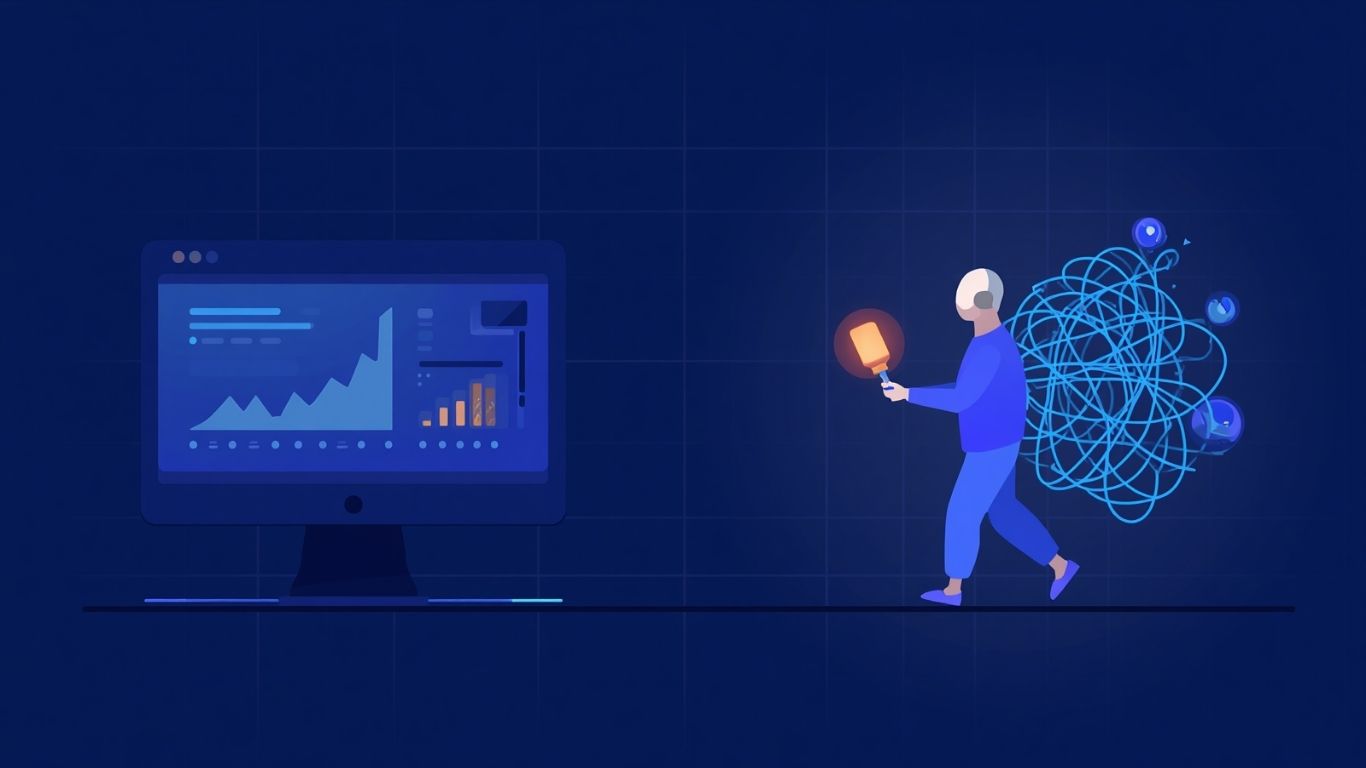
Your dashboard is patient (too patient). It sits there fully loaded, waiting for someone to open it and ask exactly the right question. Most days nobody does. The signal you needed was already in there on Tuesday, three clicks deep, and it aged discretely while everyone got on with their week.
Agentic analytics turns that around. The system goes looking on its own, spots the thing that moved, and tells you before you thought to check.
Think about how much time that saves you! Now let's pull it apart, because the hype around it is doing the idea no favours.
So what is agentic analytics, actually?
Start with what it isn't. It isn't a chatbot glued to your data.
Being able to ask your data a question in plain English is genuinely useful, and it's a real step forward. But it's still reactive. You have to know something's worth asking, form the question, and go type it. The insight only exists because you went hunting for it.
Agentic analytics is the part that does the hunting. An agent watches your product data continuously, notices when a number breaks its normal pattern, works out a likely cause, and pushes that to you as a finished thought. No prompt required. It plans the analysis, runs it, checks its own work, then surfaces what matters. You wake up to "signups from the UK dropped 22% after Thursday's release, and it's isolated to Safari," not a blank search box.
The difference is who does the noticing. That's it. And it's a bigger deal than it sounds.
This is landing fast, too. Gartner expects 40% of enterprise apps to ship with task-specific AI agents by 2026, up from less than 5% in 2025. Analytics is one of the first places these agents are showing up, because analytics is where the boring, repetitive digging lives.
For years we sold people better and better dashboards, then acted surprised when they didn't look at them. The truth is that staring at charts is a chore, and most teams are too busy to do it well. Agentic analytics is us finally admitting that. If the machine can watch the data every hour and only tap you on the shoulder when something actually changed, why would we ever go back to asking humans to remember to check? Ian Naylor, Founder SaaSToolkit.ai
The dashboard era was already dying
Here's the backdrop: The dashboard model was struggling long before agents turned up.
You know the pattern. Someone requests a report. The data team builds a beautiful dashboard. Everyone admires it for a week. Then it becomes the dashboard that gets built, then just ignored, because the questions people actually have keep changing and a fixed chart can't keep up.
The cost of that is real and it's mostly hidden. Analytics teams burn somewhere between 40% and 60% of their time answering one-off, ad-hoc questions that no pre-built dashboard ever anticipated. "What happened to conversion last Tuesday?" "How does this cohort compare to last quarter's?" These are slightly different every time. You can't pre-build your way out of them.
So you get the worst of both. Expensive dashboards nobody opens. And a data team drowning in questions the dashboards were supposed to prevent.
An agent doesn't get bored and it doesn't need a fresh dashboard for every new question. That's why this feels less like a feature and more like a replacement for how the whole thing worked.
What an agent does that a chart never could
Three things, mainly. And they matter in a specific order.
First, it watches. Constantly, across every metric, without deciding in advance which one is interesting. A human picks five things to track and misses the sixth. An agent doesn't have to choose.
Second, it explains. When something moves, the agent doesn't just flag the dip. It goes and finds the segment, the release, the broken payment provider, the one browser where the thing fell over. It brings you the why, not just the what. That second half is where analysts usually spend their afternoon.
Third, and this is the one people underrate, it can recommend the next move. Not "conversions are down." More like "conversions are down for trial users who never hit the second onboarding step, and here's the cohort to email." A finding you can act on before lunch beats a chart you'll interpret next week.
The teams getting value from this stopped thinking of it as a reporting tool. It's closer to hiring a junior analyst who never just sleeps and never forgets to look. You use it to widen what you notice, then a human decides what's worth acting on. Get that division of labour right and it pays off in the boring, useful way. Get it wrong and you've just automated your bad assumptions. Ian Naylor, Founder SaaSToolkit.ai
Where agentic analytics still trips over its own feet
Now the part the demos skip - This technology is early, and early means messy.
An agent that confidently explains the wrong cause is more dangerous than no agent at all, because it sounds sure. It'll tell you the drop was Safari when really your tracking broke. If your team treats every agent output as gospel, you'll make fast, well-organised, confident mistakes. Gartner reckons more than 40% of agentic AI projects will be scrapped before the end of 2027, and shaky data quality is near the top of the reasons why.
The fix isn't to wait until it's perfect. It's to feed it clean, well-structured, trustworthy data and keep a human in the loop for anything that triggers a real decision. Garbage in still ruins everything, and it ruins it faster now.
An agent is only as good as the data underneath it, and that hasn't changed one bit. We see people wanting the clever AI layer before their event tracking is even reliable. That's backwards. If your data is a mess, agentic analytics just delivers your mess to you faster and with more confidence. Sort the foundation first. Then the agent has something honest to reason about, and suddenly it earns its keep. Becky Halls, Strategist at SaaSToolkit.ai
Foundation first. The clever bit second. Always that way round.
How to actually start
You don't need to rip anything out. You need a sensible on-ramp.
Begin narrow. Point an agent at one thing that genuinely matters, like activation or a key conversion step, and let it watch that. Small scope means you can sanity-check its findings against what you already know, which is how you build trust before you widen it.
Keep the human review on anything that moves money or messaging. The agent proposes. A person decides. That single rule prevents most of the disasters.
And clean your inputs before you get fancy. Reliable events, consistent naming, one source of truth for who did what. An agent reasoning over solid data is a quiet superpower. An agent reasoning over guesswork is a confident liar in a nice suit.
Do that, and the shift is genuinely freeing. Your team stops manually checking dashboards that were already out of date and starts responding to things that actually happened. The noticing gets handled. The judgement stays human. That's the split worth building around.
FAQ
What is agentic analytics? It's analytics where an AI agent monitors your data on its own, spots meaningful changes, digs into the likely cause, and surfaces the finding without anyone prompting it. The key word is autonomous. It works while nobody's watching the dashboard, which is most of the time.
How is agentic analytics different from natural language analytics? Natural language analytics lets you type a question and get an answer, so you still have to know what to ask. Agentic analytics does the asking for you. One waits for your question. The other brings you the answer you didn't know you needed.
Will agentic analytics replace data analysts? Not really, but it changes the job. The repetitive digging and monitoring gets automated, which frees analysts for the harder work: judging what a finding means, deciding what to do, and checking the agent hasn't been fooled by bad data. The noticing gets cheaper. The thinking gets more valuable.
Is agentic analytics reliable enough to trust yet? Partly. It's excellent at surfacing things a human would miss and shaky at being certain about causes. Treat its output as a well-informed tip, not a verdict, and keep a person in the loop for real decisions. Reliability also depends heavily on how clean your underlying data is.
Do I need perfect data before using it? No, but you need honest data. If your event tracking is inconsistent or your sources disagree, an agent will just deliver those problems to you faster and with more confidence. Fixing the foundation first is what makes the AI layer worth having.
How does SaaSAnalytics.ai fit into this? SaaSAnalytics.ai captures behavioural, referral and revenue data from a single JavaScript snippet, which gives an agent the clean, connected foundation it needs to reason well. Because it all lives in one place, you can watch the full path from anonymous visitor to paying customer without stitching sources together first. That's the groundwork agentic analytics runs on.