Involuntary Churn Is the Revenue Leak You're Not Even Fighting
behaviour analytics churn and retention saas metrics SaaS analytics subscription analytics user behavior analytics
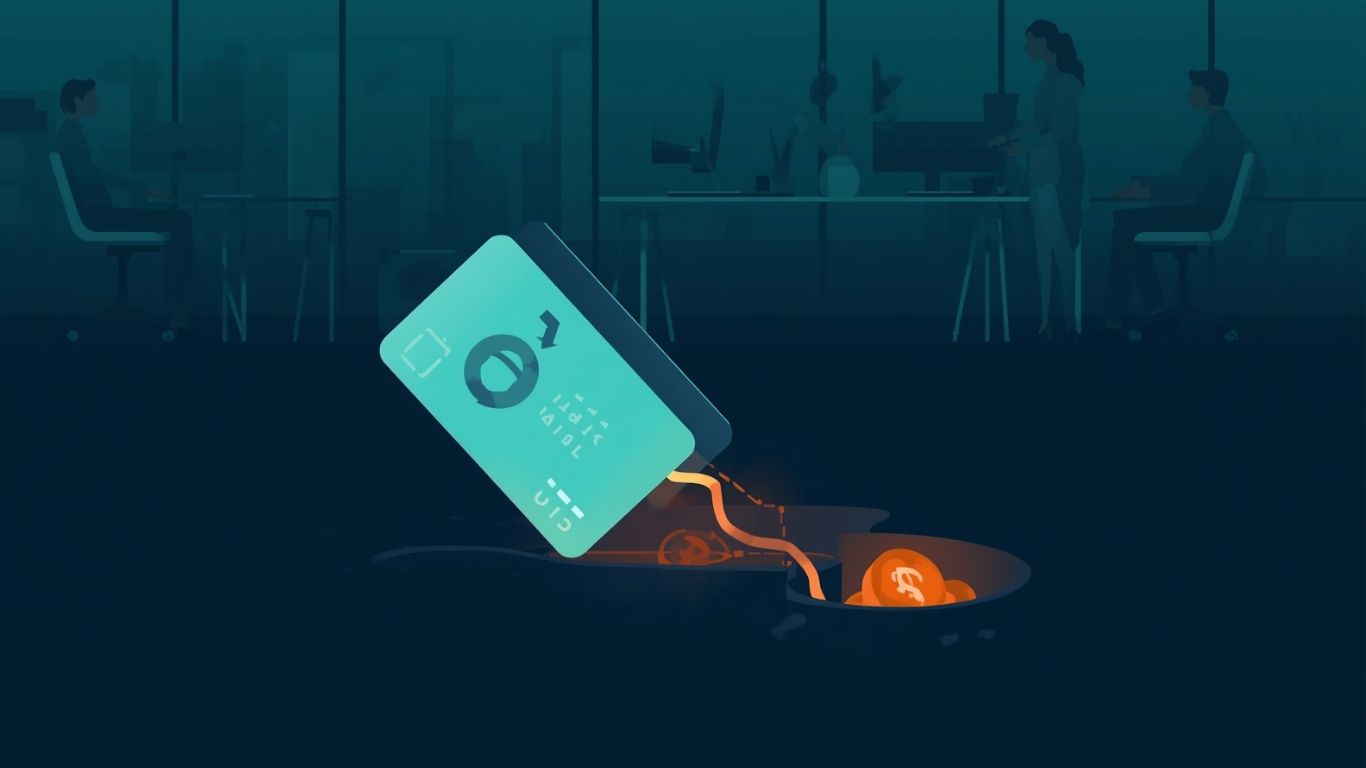
A customer leaves and you never hear a word... No cancel click. No angry email. No exit survey. Their card expired, the charge bounced, and the subscription lapsed on its own. They still wanted the product. They just stopped paying for it, and nobody told either of you.
That's involuntary churn: It's the churn you're not fighting, because it doesn't look like churn at all. Voluntary churn is a decision a customer makes. This one gets made by a billing system, and it costs more than most teams ever realise.
So it hides. Most people fold it into one big churn number and move on. Under that tidy figure sits a stack of revenue from customers who never actually chose to go.
The churn hiding inside your churn
Involuntary churn is money you lose to a failed payment, not to a choice. A card expires. A bank declines the charge. An account runs short at renewal. The subscription lapses, and the customer usually has no clue it happened.
Now compare that with voluntary churn. Someone weighs up your product, decides it isn't worth it, and cancels. That's feedback. Blunt, but useful. Involuntary churn tells you nothing about your product. The person still wants what you sell.
Here's the part that stings. Most of it comes back if you ask. These are customers with full intent to stay, which makes this the most recoverable money in the entire business. Ignore it and you're not losing a fight. You're skipping one.
It's bigger than you'd guess
Pull your churn report and look hard. A real slice of it is probably failed payments you quietly wrote off. Involuntary churn makes up an estimated 20 to 40% of all subscription losses, according to Recurly. Call it a third of your churn, from people who never meant to leave.
Now zoom out to the whole market. Failed subscription payments were forecast to cost companies more than $129 billion in 2025. Not lost to a rival. Not lost to a better tool. Lost to expired cards and soft declines.
One 2026 retention guide calls it "the silent, recoverable third of SaaS churn". Six words, whole problem. It's silent, so you don't chase it. It's recoverable, so leaving it alone is a decision, even when it doesn't feel like one.
Why the leak stays out of sight
The reason this hides so well is boring. The signals live in the wrong place. A failed charge is a billing event, sitting in Stripe or your payment processor. Your churn conversation happens in a spreadsheet or a product tool that never sees it.
So the two never meet. Finance sees a decline code. The growth team sees a churned logo. Nobody connects the card that bounced to the account that vanished. The MRR report shows the hole a month later, long after the window to fix it closed.
"Involuntary churn survives because it falls between two teams," says Ian Naylor, Founder of SaaSToolkit. "Payments live in one system, retention lives in another, and the failed charge never reaches the people who care about keeping the customer. So it gets counted as churn instead of what it actually is, which is a billing hiccup you could have caught in a week. When the payment event, the product usage and the account all sit under one customer, a bounced card stops being a mystery cancellation and becomes a task with a deadline."
That gap is the whole game. You can't recover a failure you can't see in time.
Not all failures are equal
Lumping every failed payment together is another quiet mistake. The causes are different, and so are the fixes. Some recover on a retry. Some need the customer to lift a finger.
Expired cards are the big one. A subscription runs happily for eighteen months, then dies the day the card on file expires. Expired cards alone drive 20 to 30% of all payment failures, and a retry never fixes them. Only a new card does. Insufficient funds often clear on a smartly timed second attempt. Bank declines and reissued cards usually need a real nudge to the customer.
Treat them the same and you waste effort. Retry an expired card fifty times and nothing happens. Fail to retry a temporary decline and you throw away an easy win.
How to actually fight it
Start by measuring it on its own. Split churn into voluntary and involuntary and watch the second number separately. You can't fix what you refuse to name. Most teams get a shock the first time they see how much of their "churn" is really failed payments.
Then close the timing gap. A bounced charge should reach someone, or something, fast. The recoverable window is roughly seven to fourteen days, not a quarter. Reach the customer inside it and a big share come back, because they wanted to stay the whole time.
"The teams that beat involuntary churn stop treating it as a finance problem," says Becky Halls, Strategist at SaaSToolkit. "They wire the failed payment to the same place they watch product usage, so the account that just bounced is also the account they can see logging in every day. That context changes the message. You're not chasing a deadbeat. You're telling a happy, active customer their card needs a quick update. It lands completely differently, and it's the difference between a 30% recovery and a 70% one."
This is the same instinct behind an early-warning system for accounts going quiet. Catch the signal early, act while it matters, keep the customer you already earned.
Where SaaSToolkit fits
We built SaaSToolkit so this leak stops being invisible. Product usage, billing and retention tie to one customer identity, from a single snippet. A failed payment doesn't disappear into a processor. It shows up next to that account's activity, so you can see it's an engaged customer with a dead card, and act before the window shuts.
That turns involuntary churn from a line in a quarterly report into a thing you handle this week. No stitching exports together. No finding out too late. If your churn rate is already lying to you, the failed-payment slice is a chunk of the lie, and it's the easiest chunk to win back.
Stop writing off customers who never left. See what your real churn looks like, free.
FAQ
What is involuntary churn? Involuntary churn is when a subscription ends because a payment failed, not because the customer chose to cancel. The card expired, funds ran short, or the bank declined the charge. The customer usually still wants the product and often doesn't know their access lapsed, which is why so much of it is recoverable.
What's the difference between voluntary and involuntary churn? Voluntary churn is a decision. Someone cancels because of price, fit, or value. Involuntary churn is an accident, where a card fails at renewal and the subscription lapses with no decision at all. They need opposite responses, so blending them into one churn number hides your easiest win.
How much of total churn is involuntary? Around 20 to 40% of subscription losses are involuntary, according to Recurly, though it skews higher for early-stage and consumer products and lower for established B2B on annual plans. Roughly a third of your churn is a fair working estimate until you measure your own.
Can you actually recover failed payments? Yes, and at a high rate. Basic retries recover 20 to 30% on their own. Add timely, well-worded outreach and a simple way to update a card, and recovery climbs to 50 to 70%, because the customer wanted to stay the whole time.
How does SaaSToolkit help with involuntary churn? It ties billing, product usage and retention to one customer identity from a single snippet, so a failed payment shows up next to that account's real activity instead of hiding in your payment processor. You see it's an active customer with a dead card and act inside the recovery window. Try it free.